
If you’ve ever spent time hooking up a trailer, you’ve probably noticed it: a small, unassuming plastic box mounted near the hitch, usually with a thin coiled cable dangling from it. Compared to the massive truck pulling the load or the heavy-duty axles underneath, it looks like a toy.
But don’t let its size fool you. That “little battery” is the most important safety feature on your trailer. It’s the Breakaway System, and it’s the only thing standing between a minor mechanical failure and a highway catastrophe.
What Exactly Is It?
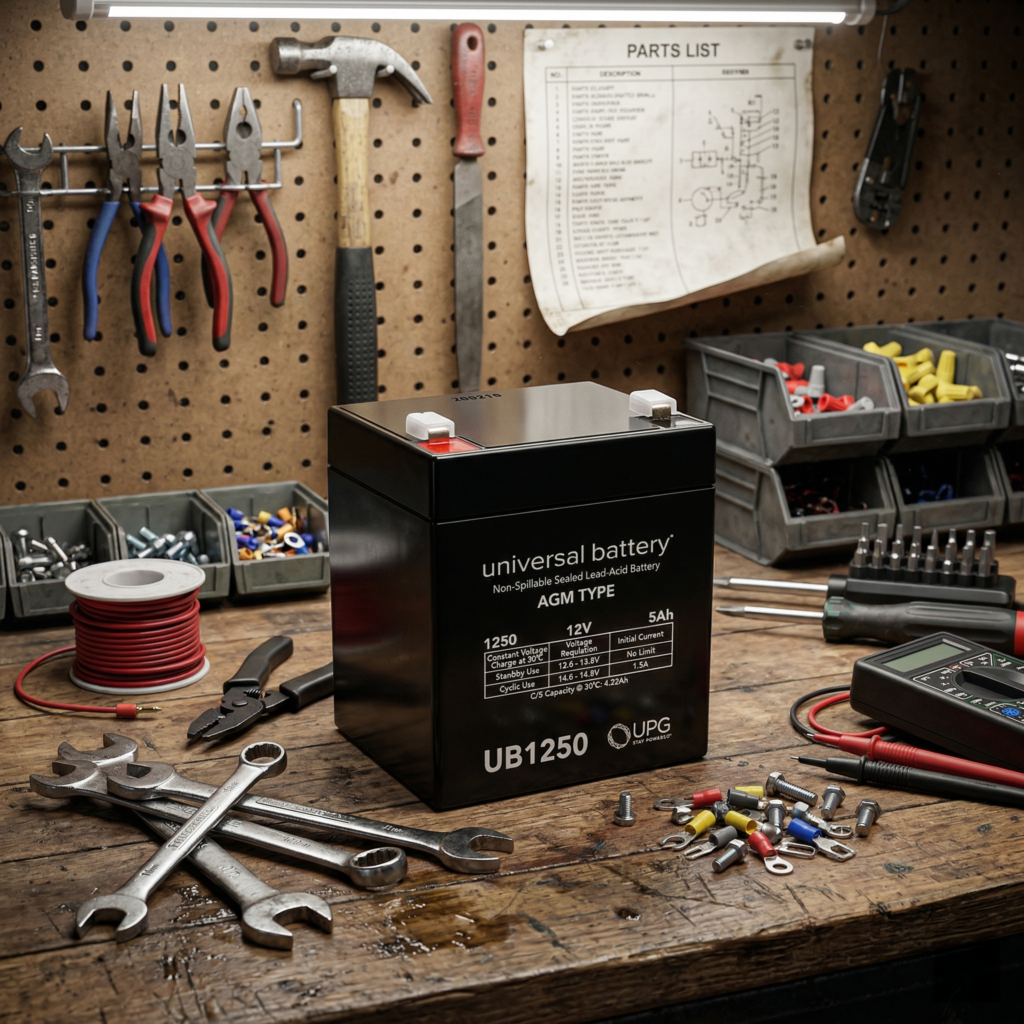
In technical terms, it’s a Breakaway Battery Kit. Its sole purpose in life is to act as an emergency power source for your trailer’s electric brakes.
Under normal driving conditions, your trailer brakes are powered by your truck’s battery through the 7-way plug. But if the unthinkable happens: your hitch fails, your safety chains snap, and your trailer decides to go “rogue” and leave the tow vehicle, that 7-way plug will rip out, leaving the trailer with zero power and zero brakes.
That’s where the little battery steps in.
How the Magic Happens (The “Oh No” Moment)
The system is surprisingly simple, which is exactly what you want in an emergency:
- The Cable: You’ve got a small steel cable attached to a pin inside a switch on the trailer. You’re supposed to clip this cable to a secure spot on your truck’s frame (not the hitch ball!).
- The Pull: If the trailer separates from the truck, that cable pulls the pin out of the switch.
- The Activation: Once the pin is pulled, the circuit closes. The breakaway battery immediately sends 12 volts of pure adrenaline directly to the trailer’s electric brakes.
- The Stop: The magnets in your brakes engage, locking the wheels and bringing that heavy runaway trailer to a halt before it can cross into oncoming traffic or find its way into a ditch.
Why You Should Care (Beyond the Law)
Yes, in almost every jurisdiction, having a functional breakaway system is legally required for trailers over a certain weight (usually 3,000 lbs). But beyond avoiding a ticket, consider the “nightmare fuel” factor.
A runaway trailer is essentially a multi-ton unguided missile. Without a working breakaway battery, a disconnected trailer will maintain its momentum until it hits something or someone. That little battery provides peace of mind that even if the hardware fails, the physics will be kept in check.
Don’t Set It and Forget It
The biggest mistake trailer owners make is assuming that because the battery is there, it’s working. These batteries are small, and they don’t have the “juice” of a car battery. They can die from cold weather, age, or simply sitting idle for months.
How to stay safe:
- Test the Pin: Occasionally pull the breakaway pin while the trailer is unhooked. You should hear the brake magnets “hum” or feel the brakes engage if you try to pull the trailer with your truck (just remember to put the pin back in immediately, or you’ll drain the battery!).
- Check the Charge: Most modern kits have a “Test” button with a light. Use it. Green means go; red means you’re towing a liability.
- Replace Regularly: These batteries typically last 2–3 years. If yours looks like it survived a prehistoric era, it’s time for a $20 upgrade.
- Keep it Charged: Most 7-way plugs will trickle-charge the breakaway battery while you drive, but if your trailer sits for long periods, consider a dedicated maintainer.
The Bottom Line
Towing can be stressful enough without worrying about a “Final Destination” scenario. That little black box is your silent bodyguard. Treat it well, check it often, and it will be there for you if things ever go sideways.
Happy (and safe) hauling!