
For many people, owning a trailer seems like a practical investment until you consider how often it is actually used. In 2026, more individuals and businesses are choosing to rent instead of buy, driven by rising costs and a shift toward more flexible, on-demand solutions.
One of the biggest advantages of renting is avoiding the upfront cost. Purchasing a trailer can require a significant investment, especially for specialized types. Renting gives you access to the same functionality without tying up capital in something you may only use occasionally.
Storage is another common challenge. Trailers take up space, and not everyone has room to keep one. In some areas, storing a trailer at home is inconvenient or restricted. Renting removes that concern entirely, since you only have the trailer when you need it.
Maintenance is also easy to overlook when buying. Tires, brakes, lights, and general wear all require ongoing attention and expense. With a rental, those responsibilities fall on the owner, not you. Renting also gives you flexibility. Different jobs require different trailers, whether it is a utility trailer for general hauling, an enclosed trailer for protection, or a dump trailer for heavy materials. Instead of being locked into a single option, you can choose the right tool for each job.
For most people, trailers are used infrequently. Renting allows you to pay only for the time you actually need, which makes it a far more cost efficient option for occasional use. This is especially important for small businesses and independent workers who want to keep overhead low and maintain flexibility as they grow.
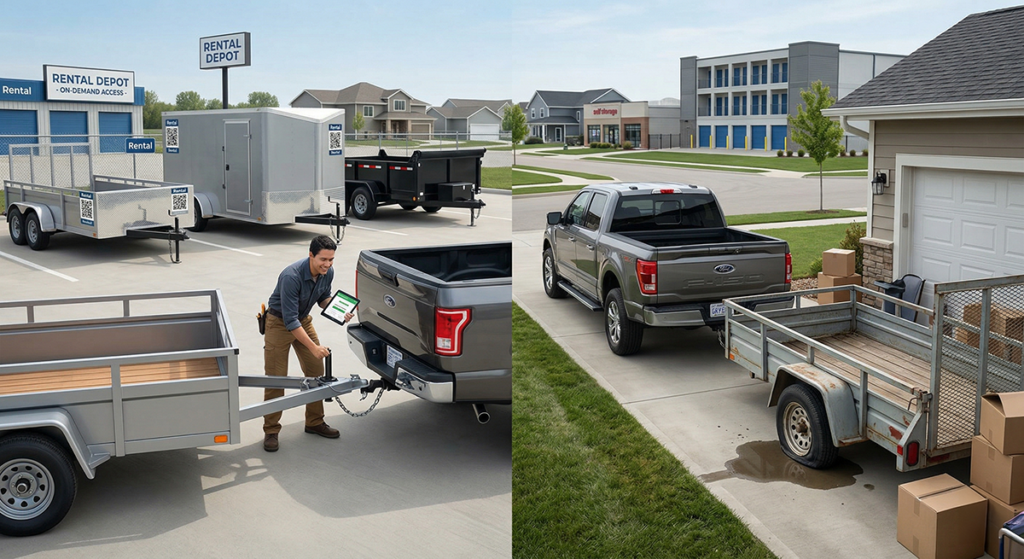
Access has also become easier. Peer to peer rental platforms connect renters with local trailer owners, often providing more options and better pricing than traditional rental companies. This reflects a broader shift toward access over ownership, similar to platforms like Turo.
Another factor is depreciation. Like most equipment, trailers lose value over time. When you buy, you take on that loss. When you rent, you avoid it completely.
Renting can also serve as a practical way to test different trailer types before deciding to purchase one long term, if you ever need to.
Final Thought
In 2026, ownership is no longer the default choice. Flexibility, lower costs, and convenience are leading more people to rent instead.
If you only need a trailer occasionally or want to avoid the hidden costs that come with ownership, renting is often the smarter and more efficient option.