
Understanding Tongue Weight: The Key to a Safe, Sway-Free Tow
When it comes to towing, one of the most overlooked yet critical factors is tongue weight. Many people focus on trailer size, towing capacity, or hitch type—but tongue weight is what keeps everything stable on the road. If it’s off, your trailer could start to sway, creating a dangerous situation for both you and everyone else around you.
What Is Tongue Weight?
Tongue weight is the downward force that the trailer’s tongue exerts on the hitch ball of your towing vehicle. In simple terms, it’s how much weight from the front of the trailer presses down on your vehicle.
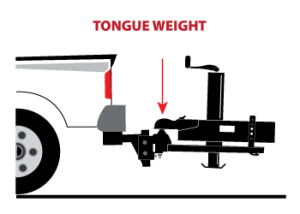
The general rule of thumb:
Tongue weight should be about 10–15% of the trailer’s total loaded weight. So, if your trailer and cargo weigh 5,000 lbs, the tongue weight should be around 500–750 lbs.
Why Does Tongue Weight Matter?
Too little or too much tongue weight can cause serious problems:
Too little tongue weight (less than 10%) The trailer becomes “light” at the hitch. This can lead to swaying from side to side, especially at highway speeds or in windy conditions. It feels unstable, and even small steering inputs can make it worse.
Too much tongue weight (more than 15%) The trailer pushes down heavily on the back of the tow vehicle. This lifts the front wheels of your tow vehicle slightly, reducing steering control and braking ability. It also causes your rear suspension to sag, putting stress on tires and axles. Both extremes make towing unsafe.

How to Check and Adjust Tongue Weight
Use a Tongue Weight Scale, portable scales are designed specifically for trailers, giving you an accurate measurement.
Weigh at a Truck Scale
Commercial truck scales allow you to check axle weights and calculate tongue weight by comparing readings.
Adjust Your Load
If your tongue weight is too light → move cargo forward, closer to the hitch. If it’s too heavy → move some cargo toward the back, balancing the load. Always distribute weight evenly from side to side as well.
Preventing Trailer Sway
Proper tongue weight is your first defense against trailer sway. Other ways to keep things stable:
Use a weight distribution hitch for heavier trailers. Make sure tires on both the trailer and tow vehicle are properly inflated. Avoid overloading your trailer beyond its rated capacity. Drive at moderate speeds—sway is much more likely at higher speeds.
The Bottom Line
Tongue weight might not be the first thing you think about when hitching up a trailer, but it’s absolutely essential. Keeping it in the right range ensures safer handling, prevents sway, and protects your tow vehicle from unnecessary stress.
When in doubt, measure, adjust, and balance. Your safety—and the safety of everyone else on the road—depends on it.
