
Properly lubricated wheel bearings are the difference between a smooth road trip and being stranded on the shoulder with a seized axle. If you’ve never greased your trailer bearings before, don’t worry, it’s a messy but straightforward job that every trailer owner should master. Here is how to get it done without the headache.
Why Do Bearings Need Grease?
Trailer bearings allow your wheels to spin with minimal friction. Over time, heat breaks down the grease, and moisture (especially on boat trailers) can cause corrosion. Adding grease creates a barrier that keeps out water and ensures metal never rubs directly against metal.
Two Ways to Grease: The EZ-Lube vs. The Manual Repack
Method 1: The EZ-Lube System (Fastest)
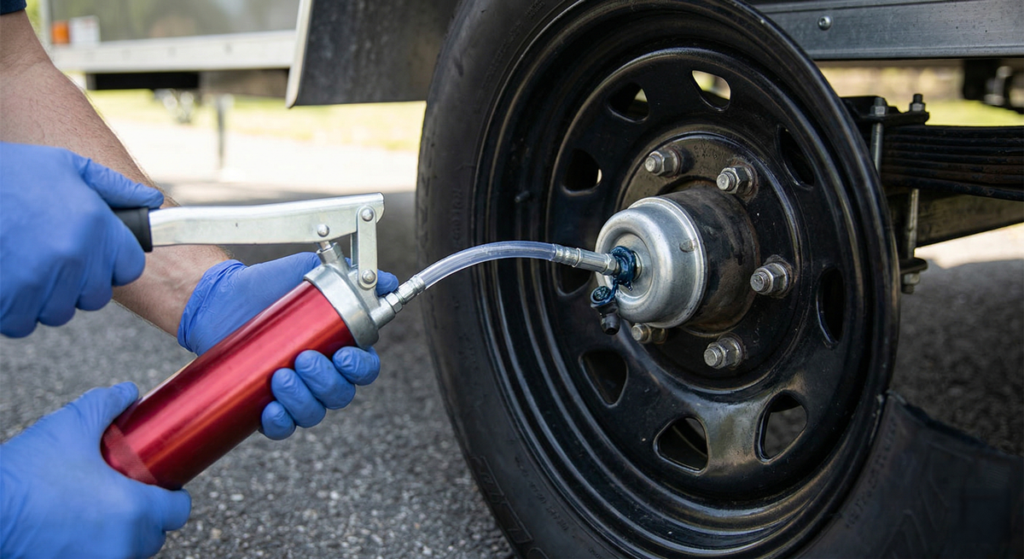
Most modern trailers come equipped with “EZ-Lube” axles. You can identify these by a small rubber cap in the center of the metal hub dust cap.
- Remove the Rubber Plug: Pop off the small rubber center piece on the hub.
- Attach Grease Gun: You’ll see a grease fitting (Zerk fitting) inside. Attach your grease gun.
- Pump Slowly: While slowly rotating the tire by hand, pump the grease gun.
- Watch the Flow: Old grease will begin to flow out toward you. Stop when you see the color of the new, fresh grease appearing.
- Clean and Close: Wipe away the excess old grease and replace the rubber plug.
Warning: Never use a pneumatic (air-powered) grease gun on EZ-Lube axles. The high pressure can blow out the rear inner seal, getting grease all over your brakes!
Method 2: The Manual Repack (The “Gold Standard”)
If you don’t have EZ-Lube fittings, or if it’s been more than 12 months, you should do a full manual repack.
- Jack and Secure: Lift the trailer and secure it on jack stands. Remove the wheel.
- Remove the Hub: Pry off the dust cap, remove the cotter pin and the large spindle nut. Pull the hub toward you.
- Clean Everything: Use a parts cleaner or degreaser to remove every bit of old grease from the bearings and the inside of the hub.
- Inspect: Look for “pitting” or blue discoloration on the bearings (signs of heat damage). If they aren’t shiny and smooth, replace them.
- The “Palm” Method: Put a glob of high-temp grease in your palm. Press the edge of the bearing into the grease repeatedly until it “squishes” out the other side.
- Reassemble: Put the bearings back, install a new rear seal, and tighten the spindle nut until snug (but not so tight the wheel won’t spin).
What Kind of Grease Should I Use?
Don’t just grab whatever is in the garage. You need High-Temperature Marine Grade Lithium Grease. * Why Marine Grade? It’s designed to resist water washout.
- Why High-Temp? Trailer brakes and long highway hauls generate significant heat that can melt “general purpose” grease.
Maintenance Schedule
| Usage Type | How Often to Grease |
| Standard Utility Trailer | Every 12 months or 12,000 miles |
| Boat Trailer (Saltwater) | Every 3–4 months (or after every immersion) |
| Heavy RV/Camper | Every season before the first big trip |
Pro Tips for a Clean Job
- Use Nitrile Gloves: Bearing grease is notoriously hard to wash off your hands.
- The “Temperature Test”: During long trips, stop at a gas station and feel your wheel hubs (carefully!). They should be warm, but never hot. If a hub is too hot to touch, your bearings are failing or lack grease.
- Carry a Spare: Always keep a “pre-greased” hub assembly in your trailer toolbox. It turns a 3-hour roadside nightmare into a 15-minute fix.