
Demystifying U-Haul Secret Codes: Decoding Moving Trucks & Trailers
If you’ve ever rented a U-Haul truck or trailer, you may have spotted seemingly random letters and numbers used to classify the equipment. Far from being arbitrary, these U-Haul secret codes form an essential internal shorthand that designates everything from vehicle size to trailer types and specific features. For renters, understanding what these U-Haul codes mean can truly make a difference, empowering you to make more informed decisions for your move. This clarity helps you select the optimal equipment for your specific needs, potentially saving you from costly surprises and simplifying the comparison process when exploring various moving and towing options.
U-Haul codes are effectively detailed identifiers that allow U-Haul staff to quickly manage their extensive inventory and ensure customers are matched with the right tools for local or one-way rentals. While many of these classifications aren’t explicitly documented for public consumption, savvy renters and industry professionals have become well-acquainted with the most common ones. Grasping these logical letter and number combinations provides immediate insight into a vehicle’s capacity, a trailer’s intended function, important safety features, and overall equipment availability, streamlining the entire rental experience.
A Guide to Common U-Haul Truck & Trailer Codes Explained
Let’s decode some of the most frequent codes you’re likely to encounter when looking for U-Haul trucks. Typically, these codes use a few descriptive letters to identify size and purpose. For residential moving trucks, prominent codes include DC for a substantial 20-foot box truck, often chosen for larger homes or families, and TM designating an even larger 26-foot moving truck. If your move is smaller, look for TT specifying a standard pickup truck or JH for a convenient cargo van. Each unique combination instantly tells both U-Haul staff and informed customers exactly what type of vehicle is being discussed, its dimensions, and its suitability for various local and long-distance moving tasks.
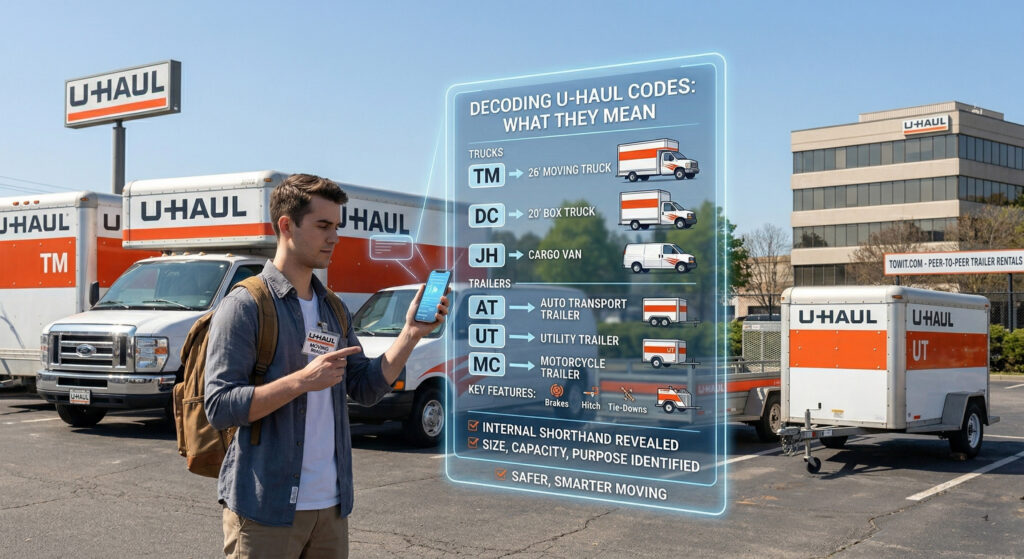
The U-Haul trailer codes follow a similar logical structure to identify the type and capacity of towing equipment. When considering towing your own vehicle or other cargo, understanding these codes simplifies ensuring proper hitch compatibility and choosing the safest option. Common codes include UT signifying a standard utility trailer, great for various general hauling jobs. For vehicle transport, AT indicates an auto transport trailer, while DT represents a tow dolly. Specialty needs might lead you to look for MC for a dedicated motorcycle trailer. Being able to quickly decipher these specific letter codes provides valuable certainty about what you’re renting and helps confirm that your towing setup adheres to necessary safety and legal requirements, covering essential features like integrated brake systems, secure tie-down points, and convenient loading ramps.
Integrated Alternatives and Common Questions about U-Haul Codes
While decoding these standardized internal codes can be incredibly helpful for navigating U-Haul’s vast equipment selection, it’s worth noting that some moving projects may benefit from other rental avenues. For those seeking alternatives that might offer greater flexibility, localized options, and potentially lower prices, exploring peer-to-peer trailer rentals could be a strategic choice. Platforms like Towit.com allow you to directly browse diverse selections of utility, cargo, and specialty trailers, often without needing to decipher confusing internal code systems entirely, offering a potentially simpler and more customized experience for your move or haul.
Renters naturally wonder about these ubiquitous codes. Fundamentally, they denote equipment size, capacity, and function and are consistently applied across all U-Haul locations. While grasping the specifics of DC versus TM isn’t strictly mandatory to rent a vehicle, having a basic understanding of these common codes can definitely transform you into a more informed and confident customer, helping you secure the absolute best and most cost-effective equipment for your specific moving and towing requirements. Whether you stick with U-Haul or explore other local trailer rental alternatives, prioritizing clarity and ease of use in selecting your moving and towing resources can make all the difference for a smoother, safer, and more efficient move.