
A Guide to Enclosed Cargo Trailers: Sizes, Capacities, and Towing Requirements.
Enclosed cargo trailers are one of the most versatile hauling solutions available. Whether you’re moving household items, transporting equipment, or protecting valuable cargo from weather and theft, these trailers provide the security and flexibility many haulers need. But before you rent or purchase one, it’s important to understand how size impacts capacity and what kind of towing vehicle you’ll need.
Why Choose an Enclosed Cargo Trailer?
The main advantage of an enclosed cargo trailer is protection. Unlike open trailers, these units keep your cargo shielded from rain, dust, road debris, and unwanted attention. They also allow you to lock up your items, offering peace of mind during transport or when the trailer is left unattended.
Common Enclosed Cargo Trailer Sizes
5×8 ft Trailer
- Capacity: Perfect for small moves, motorcycles, ATVs, or a few household items.
- Towing Vehicle: Can be pulled by most mid-size SUVs or small trucks.
- Best Use: Weekend projects, small furniture moves, or single-equipment transport.
6×12 ft Trailer
- Capacity: Offers room for larger furniture, multiple motorcycles, landscaping equipment, or tools.
- Towing Vehicle: Requires a midsize to full-size SUV or pickup with at least a Class III hitch.
- Best Use: Small business deliveries, contractor equipment, or family moves.
7×16 ft Trailer
- Capacity: Large enough for appliances, heavy equipment, or a full household’s worth of items in a single trip.
- Towing Vehicle: A half-ton or three-quarter-ton pickup is recommended.
- Best Use: Moving homes, hauling ATVs or side-by-sides, or commercial work.
8×20 ft Trailer
- Capacity: High-volume hauls, including vehicles, large machinery, or multiple pallets of cargo.
- Towing Vehicle: A heavy-duty truck (¾-ton or 1-ton) with a strong towing package is necessary.
- Best Use: Car hauling, contractor fleets, or large-scale event and business transport.
Larger Sizes (24 ft and up)
- Capacity: Ideal for race cars, construction equipment, or moving a significant load at once.
- Towing Vehicle: Requires a heavy-duty truck with high towing capacity. In some cases, a gooseneck or fifth-wheel setup is best.
- Best Use: Professional hauling, business operations, or long-distance moves where one trip is better than several smaller ones.
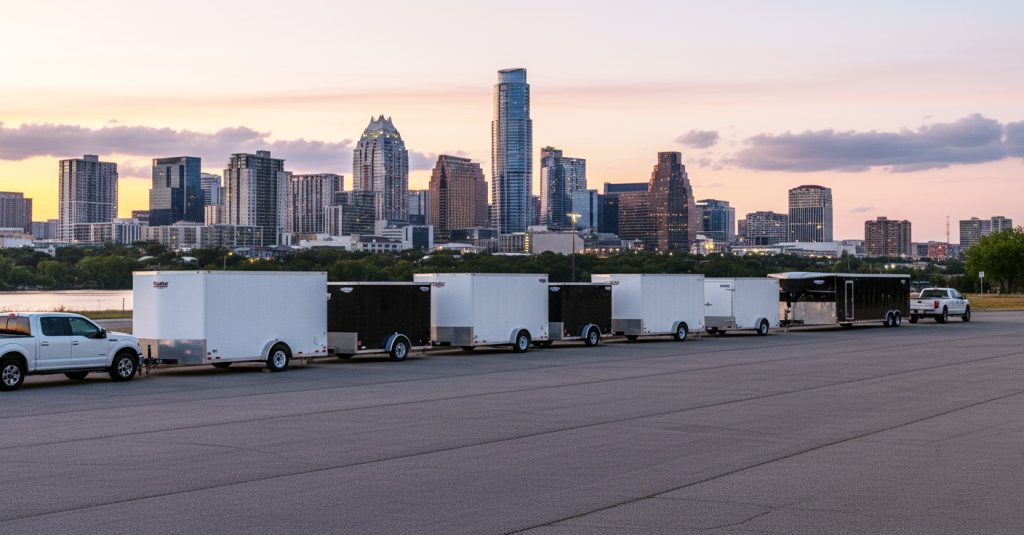
Matching Trailer Size to Your Vehicle
The bigger the trailer, the more careful you need to be with your towing setup. Larger trailers don’t just require more horsepower—they also need stronger brakes, hitches, and wiring systems. Before hooking up:
- Check your vehicle’s towing capacity.
- Make sure your hitch and wiring match the trailer requirements.
- Remember that enclosed trailers catch more wind, so stability and tongue weight distribution are key.
Final Thoughts
Enclosed cargo trailers come in a wide range of sizes, each serving different needs—from quick weekend projects to full-scale commercial hauling. Choosing the right size means balancing your cargo requirements with the towing capability of your truck or SUV. With the right match, you’ll be able to haul safely, securely, and efficiently.